

Supporting Native Youth with Culturally Relevant Tools
Native American youth are resilient, rooted in rich traditions, and deserving of resources that truly reflect their lives and communities. This toolkit is designed for the educators, counselors, tribal leaders, and mentors who show up for them every day.
Here you’ll find a curated selection of Dibble Institute relationship education materials — evidence-based tools that help young people build healthy relationships, make thoughtful decisions, and envision a strong future. And because no single program fits every community, we’ve included practical guidance to help you adapt these materials to reflect the values, stories, and strengths of the youth you serve.
You know your community best. We’re here to support your work.
Ready to explore Dibble programs for your community? Request a free review copy of any Dibble curriculum and see firsthand how these materials can be adapted for the Native youth you serve.
Love Notes
- American Indian Resource Center, OK
- Central Council of the Tlingit and Haida Indian Tribes, AK
- Choctaw Nation of Oklahoma
- Dot Lake Tribal Village, AK
- Inter-Tribal Council of Arizona, Inc
- Muscogee Indian Reservation, WI
- Oneida Tribe – Social Services, WI
- Pascua Yaqui Tribe – Health Services, AZ
- Phoenix Area Indian Health Services, AZ
- Walatowa Charter High, Jemez Pueblo, NM
Mind Matters
- Central Council of the Tlingit and Haida Indian Tribes, AK
- Inter-Tribal Council of Arizona, Inc
- Pascua Yaqui Tribe – Health Services, AZ
- Sweetgrass Youth Alliance, Canada

Relationship Smarts PLUS
- Makah Tribe – Tribal Wellness, WA
- Nevada Urban Indians
- Youth and Family Services, Lakota Tribe, Pine Ridge, SD
Check out our Tribal Case Studies below!
Goal: Increase knowledge of healthy relationships
Funding: Healthy Marriage and Responsible Fatherhood (OFA)
Setting: Reservation high school and YFS center
Curriculum: Relationship Smarts Plus
Goal: Delinquency prevention, Delinquency intervention, and Delinquency accountability services for youth at risk for delinquency or affected by the correctional system
Funding: Arizona Title II Forumla Grant
Setting: Runaway and homeless youth shelters, Tribal schools, Diversion classes, PRIDE center, AIM Program
Curriculum: Mind Matters
Goal: Violence Prevention
Funding: Office of Violence against Women
Setting: School, Camp
Curriculum: Love Notes
Read more about Implementing Mind Matters Across New Mexico
The Medicine Wheel
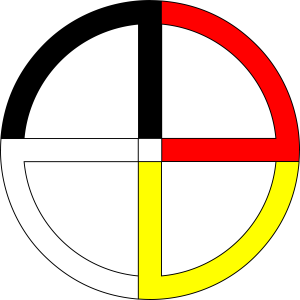
How was Cultural Adaptation Incorporated? The Medicine Wheel plays an important role in the culture and values of the Lakota tribe. The Medicine Wheel circle is seen as the basis for every part of human and animal like, earth and sky and even the universe and stars.
The Lakotas believe that all good things are represented with the circle and the Medicine Wheel is sacred. The four parts of the Medicine Wheel are the teachings about life, the seasons, animals, nations and directions. The center represents the earth and sky. Each direction: North, East, South and West encompasses the teaching of life and each person’s place in society.
The Medicine Wheel did not replace any part of the curriculum but was added to the discussion in every lesson and activity to help illustrate that the Lakota values were represented. The Medicine Wheel incorporates the four stages of man from birth to death.
Click here for more information on the Lakota Medicine Wheel.
Download the Indigenous Youth Tip Sheet pdf. here