

SAMHSA has announced the Project AWARE (Advancing Wellness and Resiliency in Education) grant.
The deadline is July 27, 2026
This funding’s purpose is to promote the social and emotional wellbeing for school-aged youth in local or tribal education agency settings, to address mental health, substance use, and co-occurring disorders.
We think that Mind Matters 2.0 could be a great program to support a three-tiered public health framework through prevention, addressing mental health, and supporting a positive school climate.
An Innovative Approach to Supporting the Whole Child
Social and Emotional Learning (SEL) and wellbeing for school age youth can help young people cope and thrive. Consider utilizing Dibble’s engaging programs that are aligned with the Collaborative of Academic, Social and Emotional Learning (CASEL) core competencies as a part of your Multi-Tier Systems of Support (MTSS) plans for the whole child and your school community.
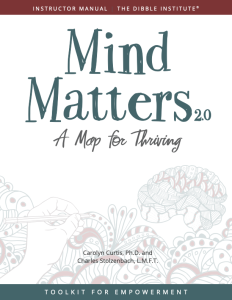
Mind Matters 2.0: A Map for Thriving
Young people experiencing trauma and toxic stress often have difficulty regulating their emotional responses when facing challenges in school, life, and relationships. The SEL skills taught in Mind Matters 2.0 help young people take charge of their emotions and improve their states of mind. Participants learn to address their physical, relational, and mental health needs.
The twelve lessons of Mind Matters 2.0, based on current research and neuroscience, are designed to be taught by a teacher or other non-clinician in the classroom or out-of-school program.
- Self-Soothing and Regulating Emotions: Learn practical tools for calming the nervous system, including focused breathing, grounding techniques, and the Reboot Sigh.
- Discovering and Managing Emotions: Develop emotional intelligence through body scans, emotion identification, and the Internal Journal.
- The Observing Self: Learn to observe thoughts and feelings without judgment, creating space between an experience and a response.
- Empathy and Co-Regulation: Build compassion and strengthen relationships through deep listening, the Loving Kindness exercise, and co-regulation practices.
- Support Networks: Map and strengthen personal support systems; practice asking for help.
- Self-Compassion and Resilience: Explore how adversity shapes the brain and body, recognize Positive Childhood Experiences, and build a resilience toolkit grounded in self-compassion and a positive growth mindset.
- Healing Through Rhythm and Reflection: Use music, movement, and Memory Release techniques to process and integrate difficult experiences.
- Tapping and Efficient Sleep: Learn Emotional Freedom Techniques (EFT/Tapping) and evidence-informed sleep practices.
- Movement and Self-Care: Design a personalized movement plan and explore the role of physical activity, play, and rest in healing. Practice effective habit formation strategies.
- Life of Intention: Develop SMARTER goals, create a Road Map for Life, and practice ethical decision-making.
- Code of Honor and Asking for Help: Clarify personal values, build the Honor Shield, and identify people who can support your goals.
- The Ongoing Journey: Review, commit, and create a Game Plan for continued growth—including a new “Track It to a Habit.”
What people are saying about Mind Matters 2.0:
We reviewed multiple curriculum options that addressed increasing emotional coping and resilience skills and felt this to be the easiest to use for instructors from various backgrounds, was evidence informed, and encompassed most of the objectives we were looking for.~Director
Using Mind Matters for Multi-Tiered Systems of Support
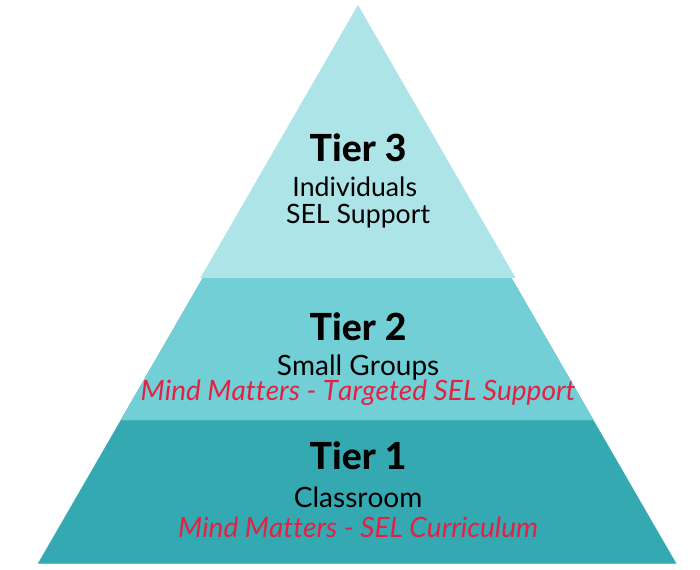
Mind Matters 2.0 can not only expand your mental health supports and services in school, but also grow students’ understanding and growth in social and emotional learning. See how the program can be used as a Tier 1, Tier 2 and Tier 3 SEL support all throughout school culture, classrooms, small groups, and in one-on-one settings.
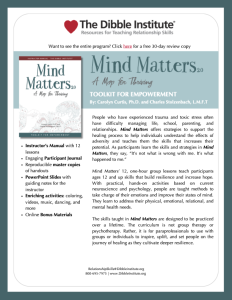
To Download the tip sheet, please click the down arrow next to the printer in the PDF reader toolbar below.