

Mind Matters 2.0 is an updated and expanded version of the research-based Mind Matters curriculum—now with new content grounded in the latest neuroscience and trauma-informed care research.
New material includes:
– Positive growth mindset – Habit formation strategies – Self-soothing
– Self-compassion – Mindful phone use. – Bonus — Gratitude lesson
Join our Mind Matters 2.0 Webinar on June 10, 2026 by registering here!
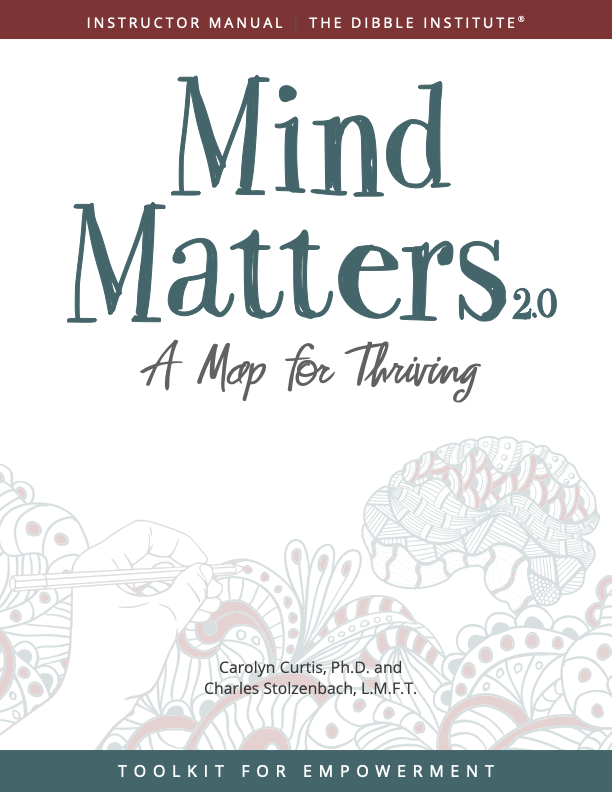
Program Length: 12 Lessons + bonus lesson on gratitude
Age Group: 12+
Authors: Carolyn Curtis, Ph.D. & Charles Stolzenbach, L.M.F.T.
A Map for Thriving
People who have experienced ongoing stress or trauma often struggle to regulate their emotions, maintain healthy relationships, and reach their goals. Mind Matters 2.0 gives them a map for the journey toward healing—and the tools to follow it.
Built on the latest research in neuroscience and trauma-informed care, Mind Matters 2.0 teaches practical, hands-on skills for managing stress, building resilience, creating a support system and cultivating self-compassion. Version 2.0 is an update to the original Mind Matters curriculum, incorporating new evidence-based tools and approaches that reflect what we have learned in recent years about trauma, hope, healing, and the brain.
Mind Matters 2.0 may be taught by non-clinicians in group or individual settings with peoples ages 12 and up. It can be implemented in a variety of settings, such as health classes, group homes, adult corrections, behavioral health, youth shelters, youth diversion, probation programs, tribal schools, and more. Participant materials will soon be available in Spanish.
Note: Training is not required but encouraged. Live virtual training are offered several times a year on a first-come, first-serve basis. Group rates are available for six or more people. Call 800-695-7975 or email relationshipskills@dibbleinstitute.org for more information.
The effects of childhood trauma and toxic stress can touch every part of a person’s life: how they feel, how they relate to others, and how they move through the world. But healing is possible, and it can begin with the right tools and support. Mind Matters 2.0 offers a practical, compassionate path forward for participants (ages 12 and up).
In 12+ lessons grounded in the latest research in neuroscience and trauma-informed care, participants learn evidence-based skills and practices that cultivate healing, build resilience, and support lasting change. The curriculum is designed to be gentle. Rather than asking participants to share or relive traumatic experiences, Mind Matters 2.0 builds skills progressively, starting with self-soothing and self-awareness before introducing more reflective content. Each lesson centers on a core concept and offers practical skills participants can begin using right away.
Mind Matters 2.0 teaches the following topics:
- Self-Soothing and Regulating Emotions: Learn practical tools for calming the nervous system, including focused breathing, grounding techniques, and the Reboot Sigh.
- Discovering and Managing Emotions: Develop emotional intelligence through body scans, emotion identification, and the Internal Journal.
- The Observing Self: Learn to observe thoughts and feelings without judgment, creating space between an experience and a response.
- Empathy and Co-Regulation: Build compassion and strengthen relationships through deep listening, the Loving Kindness exercise, and co-regulation practices.
- Support Networks: Map and strengthen personal support systems; practice asking for help.
- Self-Compassion and Resilience: Explore how adversity shapes the brain and body, recognize Positive Childhood Experiences, and build a resilience toolkit grounded in self-compassion and a positive growth mindset.
- Healing Through Rhythm and Reflection: Use music, movement, and Memory Release techniques to process and integrate difficult experiences.
- Tapping and Efficient Sleep: Learn Emotional Freedom Techniques (EFT/Tapping) and evidence-informed sleep practices.
- Movement and Self-Care: Design a personalized movement plan and explore the role of physical activity, play, and rest in healing. Practice effective habit formation strategies.
- Life of Intention: Develop SMARTER goals, create a Road Map for Life, and practice ethical decision-making.
- Code of Honor and Asking for Help: Clarify personal values, build the Honor Shield, and identify people who can support your goals.
- The Ongoing Journey: Review, commit, and create a Game Plan for continued growth—including a new “Track It to a Habit.”
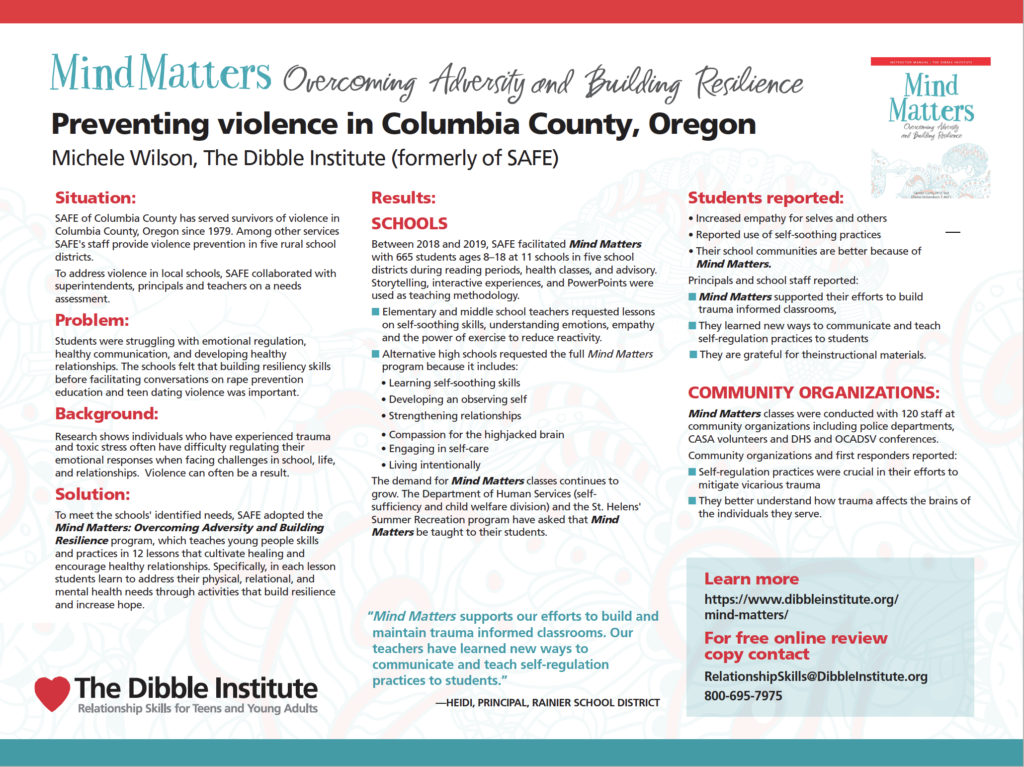
Mind Matters 2.0 has been used in a variety of organizations and settings to help prevent violence, address chronic absenteeism, prevent pregnancy, enrich parenting skills, and build a culture of compassion. It can stand alone or be folded into other curricula to build emotional regulation skills and support a more focused, engaged learning environment.
The skills taught in Mind Matters 2.0 are designed to be practiced over a lifetime. This curriculum is not therapy and is not intended to replace psychotherapy. It is a psycho-educational program designed for facilitation by non-clinicians to inspire, uplift, and set people on the journey of healing as they build deeper resilience.
Mind Matters 2.0 is a significant update to the original curriculum, developed in response to feedback from instructors and participants and grounded in the latest advances in neuroscience and trauma-informed care. Updates appear in every lesson.
Key additions include:
- A brand-new Lesson 6 focused on self-compassion and resilience. The original ACEs survey has been replaced with a gentler, strengths-based approach that invites younger participants to explore their own resilience and the Positive Childhood Experiences (PCEs) that have supported them. (The ACEs survey and lesson are still available for people 18 years and up.)
- Digital self-regulation content, including new material on doomscrolling, the Cell Phone Challenge, and healthy technology use.
- The Reboot Sigh, a quick and effective self-soothing technique.
- A Positive Growth Mindset module in the final lesson, helping participants reframe challenges as opportunities and build confidence through practice.
- An updated participant journal, which includes all self-soothing techniques, serves as a curriculum outline and includes a personal action plan for participants to take with them when the program ends.
- A bonus lesson –An Attitude of Gratitude
- Updated activities, reflection questions, and object lessons throughout.
Helping young people and adults build resilience, connection, and hope
Mind Matters 2.0: A Map for Thriving is a trauma-informed curriculum designed to support the healing and growth of young people and adults who have experienced adversity, chronic stress, trauma, and other difficult life experiences.
Mind Matters is built on current research in neuroscience, trauma-informed care, resilience, self-compassion, and positive childhood. We rely on the work of the leaders in the field, including Van de Kolk, Siegel, Scuka, Brown, Felitti & Anda, Schwartz, Carrión, Gentry, Craig, and many others.
Mind Matters 2.0 gives participants a hopeful way to understand how stress affects the brain and body—and practical tools for moving toward healing.
Rather than asking participants to share or relive painful experiences, Mind Matters 2.0 focuses on building skills. Participants learn simple, memorable practices that help them calm their nervous systems, notice what is happening inside them, build healthier relationships, care for their bodies, set meaningful goals, and move forward with greater confidence.
Why Mind Matters 2.0?
Many people who experience ongoing stress or trauma in the past or present struggle with emotional regulation, focus, trust, self-worth, and relationships. Before they can fully engage in learning, planning, or connecting with others, they often benefit from tools that help them feel safer, calmer, and more in control.
Mind Matters 2.0 is an effective precursor or companion to programs that build relationship skills, life skills, and healthy decision-making. By teaching practical strategies for emotional regulation, self-awareness, resilience, and connection, the curriculum helps clear away barriers to learning and growth.
Participants learn that their reactions to life events make sense in light of what they have experienced—and that with support, practice, and compassion, they can build new patterns.
A Gentle, Practical Approach to Healing
Mind Matters 2.0 is designed to be practical, hopeful, and accessible. Across 12 lessons, participants learn that healing is possible and that the brain can continue to grow and change.
The curriculum begins with self-soothing and emotional regulation, then gradually moves toward self-awareness, empathy, communication skills, self-compassion, building healthy support systems, implementing methods for self-care, committing to physical activity, goal-setting, and creating a plan for intentional living.
Each lesson includes hands-on activities that can be used immediately. Participants practice skills such as: calming the nervous system, grounding themselves in the present moment, noticing the difference between thoughts and emotions, practicing empathy, building supportive relationships, caring for their bodies, setting meaningful goals, and developing a positive growth mindset. Underlying all is a dedication to ethical living.
These tools help participants experience success from the very first lesson.
Practice Makes Progress
Mind Matters 2.0 centers on practice. Participants learn that practice makes progress, not perfection.
The curriculum gives participants space to grow at their own pace while building confidence through repeated use of simple, memorable skills. Over time, these small practices can become habits that support resilience, hope, and healthier choices.
The goal is not to “fix” participants. The goal is to help them recognize their strengths, understand their experiences with compassion, and practice tools that support healing and growth over a lifetime.
The Six Major Goals of Mind Matters 2.0
Mind Matters 2.0 focuses on six major goals:
- Utilize Self-Soothing Skills
Participants learn practical tools to calm the body and nervous system so they can respond to stress with greater awareness and choice. - Develop the Observing Self
Participants learn to notice their thoughts, emotions, body sensations, and behaviors without being overwhelmed by them. - Strengthen Relationships and Support Systems
Participants explore empathy, trust, communication, and the importance of caring adults and supportive relationships. - Cultivate Self-Compassion and Hope
Participants learn to understand their reactions with kindness, reduce shame, and build hope for growth and healing. - Practice Self-Care and Healthy Habits
Participants discover how sleep, nutrition, movement, mindfulness, and daily practices can support emotional and physical well-being. - Live Intentionally
Participants identify meaningful goals, strengthen a positive growth mindset, and begin creating a life guided by values, purpose, and support.
Self-Regulation Is the Foundation
Self-regulation is the foundation of Mind Matters 2.0. As participants learn to calm their bodies, notice their inner experiences, and respond with greater awareness, they begin to gain more choice in their lives.
They learn that they are not broken. Their brains and bodies have adapted in ways that helped them survive difficult experiences. With support, practice, and compassion, they can build new pathways toward resilience, connection, and hope.
The Power of Positive Experiences
Mind Matters 2.0 also emphasizes the power of positive experiences and supportive relationships. While adversity can shape development, positive childhood experiences, caring adults, safe environments, meaningful goals, and daily practices can strengthen resilience and support long-term well-being.
Participants are invited to see themselves not as damaged, but as growing.
They are already the hero in their own life’s story. Mind Matters 2.0 provides them with tools for the next steps in that journey.
Flexible for Many Settings
Mind Matters 2.0 is designed to be flexible and accessible. It can be facilitated by trained professionals, para-professionals, educators, case managers, mentors, and other caring adults in a variety of settings.
Lessons can be taught as full sessions, adapted into shorter time blocks, or integrated into existing programs. The curriculum is practical, gentle, and structured so facilitators can create a safe and supportive learning environment.
What Mind Matters 2.0 Is—and Is Not
Mind Matters 2.0 is not group therapy and does not replace psychotherapy. It does not ask participants to process trauma publicly or disclose painful personal experiences.
Instead, it is designed to inspire, uplift, and equip participants with practical tools for healing, resilience, connection, and intentional living.
The skills taught in Mind Matters 2.0 are designed to be practiced over a lifetime—helping participants build healthier habits, stronger relationships, and a more hopeful path forward.
Click here to receive your review copy of Mind Matters 2.0, because the people you work with can benefit from the information and skills they will learn from this program.
Forewords
Introduction
Mind Matters Overview
Instructor Guidance
Order of Instruction
Toolkits & Participant Journal
Online & Bonus Materials
Acknowledgements
Lesson 1: Self-Soothing…………………………………………………………………….1
- Marshmallow Test Overview and Activity
- Introduction to Mind Matters
- Focused Breathing
- Calming Corners
- 5-4-3-2-1 Skill
- Coloring
- Cell Phone Challenge, WWW Tool, and Doomscrolling
Lesson 2: Discovering Emotions……………………………………………………..17
- Body Scan
- Identifying Emotions
- Learning From Each Emotion
- Navigating Emotions for Well-Being
Lesson 3: The Observing Self………………………………………………………..,,..31
- Introduction to the Observing Self
- Reboot Sigh
- Reframing: Recognize and Transform Negative Thoughts
- Clarifying Thought and Emotions
- The Internal Journal
Lesson 4: Empathy & Co-Regulation………………………………………………..47
- Just Noticing
- Empathy & Co-Regulation
- Loving Kindness Practice
Lesson 5: Support Networks & The Wheel of Awareness…………..59
- Mapping Your Support System
- Wheel of Awareness Exercise
Lesson 6: Self-Compassion……………………………………………………………71
- Life’s Challenges and ACEs
- Other Life Challenges
- Understanding Stress
- How Stress Shapes the Brain and the Body
- A Positive Growth Mindset
- Trauma Recovery Scale Part III
- Positive Childhood Experiences
Lesson 7: Rebuilding: Reflection & Rhythm………………………………..85
- Memory Release
- Using Rhythm to Heal and Thrive
Lesson 8: Tapping & Efficient Sleep……………………………………………….93
- Experience and Learn Tapping
- Efficient Sleep
Lesson 9: Let’s Get Moving…………………………………………………………105
- Let’s Get Moving and Habit Formation Strategy
- Practice Yoga
- Movement Programs
- The Balanced Life
Lesson 10: Life of Intention………………………………………………………..117
- Your Road Map for Life
- SMARTER Goals
- Becoming a Changemaker
Lesson 11: Code of Honor & Asking for Help……………………………133
- Code of Honor/The Honor Shield
- Asking for Help
Lesson 12: The Ongoing Journey………………………………………………..143
- Personal Agreement
- The Power of “Yet”
- Game Plan and Track it to a Habit
- Anchor Object
- Closing Activity
Bonus Lesson: An Attitude of Gratitude………………………………….151
Appendix…………………………………………………………………………………….165
- Facilitating a Safe and Supportive Environment
- References
Toolkit: (Cardstock in back of Instructor Manual)
Frequently Asked Questions
Click on the questions below to expand the answers.
Can I use my Mind Matters 1.0 Instructor Manual with the Mind Matters 2.0 Participant Journal?
Yes! A crosswalk is available here for instructors who have the Mind Matters 1.0 Instructor Manual and want to use it alongside the updated Mind Matters 2.0 Participant Journal. The crosswalk guides you through any differences between the two versions so you can teach with confidence using your existing manual while your participants benefit from the new journal.
Why should I pay when I can get other programs for free?
Mind Matters 2.0 is an effective, research-based psycho-educational program that has produced significant results in decreasing PTSD symptoms and increasing trauma coping skills. It can be easily implemented by teachers and other non-clinicians who want to help people deal with their trauma. The engaging and ready-to-teach lessons give facilitators the confidence to cover sensitive content in a caring way. It is ready to use with many audiences with little need for time-consuming alterations or adaptations.
How does Mind Matters 2.0 address participant safety?
The authors of Mind Matters 2.0, Carolyn Curtis, Ph.D. and Charles Stolzenbach, L.M.F.T., have spent years working with people who experience stress in their lives and are experts in trauma. They wrote this program with the well-being of both participants and facilitators in mind. Mind Matters, based on the latest neuroscience research, has been successfully tested with diverse audiences.
From the beginning of the program, Mind Matters teaches self-soothing exercises to increase participants’ emotional regulation. These practices continue in every lesson to provide the participants with tools when addressing emotional topics.
The Mind Matters 2.0 manual has everything needed to teach the program with confidence. Each lesson includes specific safety tips for facilitators to review prior to implementing the lesson.
Mind Matters 2.0 training facilitated by a Dibble Institute Training Specialist is encouraged to fully understand how each lesson is designed to be taught. The benefit of training also includes learning how to frame and safely process lesson content.
Remember:
- Mind Matters 2.0 is a psychosocial education program, not therapy. Trauma (ACEs) is covered in general terms, including exploring the physiology of trauma and the impact of trauma on relationships, behavior, health, and learning. Participants do not discuss their personal trauma. Ultimately, the focus is on hope.
- The Participant Journal gives people an opportunity to practice the skills taught in Mind Matters in order to develop ongoing habits. The Participant Journal is not used to write about personal trauma.
- Many people find as they teach Mind Matters 2.0 that they can utilize the skills for their own self-care.
I don’t need Mind Matters 2.0 because we already use Mental Health First aid.
Mental Health First Aid is an awesome and valuable program. It’s a lot like going to the American Red Cross to take a CPR class: you could recognize the signs of someone having a heart attack if you saw it.
Mind Matters 2.0 is different. It’s more like going to the gym to work out. It is a psycho-educational program that helps people develop the skills and habits to address and heal from toxic stress and trauma. The two programs work well together!
Is the program evidence based?
Mind Matters is based on current neuro-science and strong research-based practices. Outcomes of the program include significant increases in trauma coping skills, decreases in PTSD symptoms and positive changes in emotional regulation and social competence.
I only have 20 minutes a day. Can I use Mind Matters 2.0?
Yes! Mind Matters 2.0 can be split into twenty-one 15 – 20 minute sessions. The guidance for doing so is in the appendix section.
Where is this program used? And who is it designed/written for?
Mind Matters 2.0 is being used in middle, high, and alternative schools, in residential treatment facilities, and in correctional settings to name a few locations. It is written for anyone ages 12 through adulthood who have experienced trauma or stress. Anyone can benefit from the self-soothing skills, practices to support growth, and creating a plan to move forward.
Do I have to teach all of the lessons in order?
Mind Matters 2.0 can be used very flexibly. While the skills, practices, and lesson content of Mind Matters 2.0 build from lesson to lesson, the activities and lessons can be chosen to best fit the needs of your audience, your time constraints, and other circumstances. We have even seen it successfully used with young people in a residential setting who cycled into the lessons as they were admitted to the residence, not in any particular order.
What are the appropriate ages for Mind Matters 2.0?
All ages 12 and up.
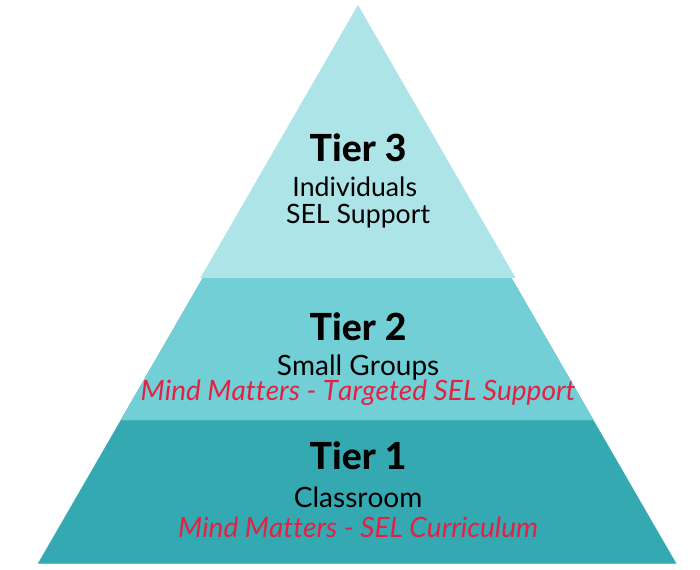
How can Mind Matters 2.0 be used in Multi-Tiered Systems of Support (MTSS) Tiers 1 and 2?
Mind Matters 2.0 can be used by any teacher to create a safe place for students, teach self-soothing skills, and help their school to develop practices that build personal resilience. It can also be used by school staff to work with smaller groups of young people who need additional support.
How can Mind Matters 2.0 be used to support Social and Emotional (SEL) Learning in schools?
Mind Matters 2.0 content addresses many of the goals for SEL in schools including the five SEL competencies: self-awareness, self-management, social awareness, relationship skills, and responsible decision making.
Do I need to be a therapist to teach this program?
No, you do not need to be a therapist to teach this program. What is essential is being an effective teacher who can explain concepts, listen empathetically to the needs of students, and be supportive of their growth.
What materials are needed to teach Mind Matters 2.0?
You will need the Mind Matters 2.0 Instructor’s Manual which includes all the lessons, self-soothing toolkit, handouts, plus access to the PowerPoint slides to download. Additionally, you will need the Journal for each participant. The Journal reinforces the content, includes the self-soothing skills instruction, and allows the participant to create regular plans to practice skills so they become habits.
Are there any support materials?
Yes! Teachers can access an online Facilitator Portal that includes the PowerPoint slides for each lesson, plus additional activities to go deeper into the content.
Do I need training in order to teach Mind Matters 2.0?
While training is not required, there are clear benefits for facilitators and organization staff attending a Mind Matters 2.0 training. Questions may arise from participants about why they are learning certain practices or they may wonder why a practice works. Facilitator training provides an opportunity to understand the “how” and the “why.” The facilitator will see how the lessons and exercises are framed and modeled, and they will have an opportunity to practice with skilled trainers. All this allows for more confidence and competence when they do start teaching.
What is mental wellness?
According to the World Health Organization, mental wellness is defined as “a state of well-being in which the individual realizes his or her own abilities, can cope with the normal stresses of life, can work productively and fruitfully, and is able to make a contribution to his or her community.”
What is the difference between a Becoming Trauma-Informed program and Mind Matters 2.0?
A Trauma-Informed Program refers to changing the culture of an organization. For example, changing a culture might include changing processes and procedures or updating signage. Mind Matters instead focuses on helping an individual with previous trauma and toxic stress move towards healing.
The Mind Matters 2.0 Curriculum plays an essential role in a trauma-informed organization. Mind Matters 2.0 goes beyond knowing how to respond to a victim of trauma by laying out a plan of action for the victim to move towards healing. Topics include:
- Learning Self-soothing Skills,
- Developing an Observing Self,
- Building Supportive Relationships,
- Understanding and Compassion for the Hijacked Brain,
- Practicing Self-care, and
- Building a Life of intentionality.
What is the difference between Mind Matters 2.0, Mind Matters Now, Mind Matters Minutes, and Me & My Emotions?
Mind Matters is a 12-lesson out-of-the-box program ready to teach in school, community, or personal settings. It’s hands-on activities and content is meant to be facilitated by an adult in classroom, group, or one-on-one settings.
Mind Matters Now is available for an adult audience who is interested in learning the skills and practices of Mind Matters to benefit their own lives and as a professional development tool.
Mind Matters Minutes are a collection of 9 free, short videos to help you walk through self-soothing skills piece by piece.
We are excited to offer Me & My Emotions as a free digital experience website for teenagers! Learn the practices and skills from Mind Matters in a fun, game-like environment on the website. Watch videos, collect points and badges, and set plans to practice.
Carolyn Rich Curtis, Ph.D., a Licensed Marriage and Family Therapist, is the author of Mind Matters: A Map for Thriving.
Dr. Curtis obtained her doctorate from the Professional School of Psychology, Masters from CSU, Sacramento, and Bachelor’s Degree from UC, Davis. She founded he Relationship Skills Center in Sacramento, which was recognized as one of the leading organizations in the nation for building healthy relationships. Dr. Curtis spoke at the White House about the Center’s success. She continues to speak at national conferences, including the Fathers and Families Coalition of America.
In her thirty-five years of clinical practice, she specialized in working with couples, alcohol abuse and trauma. She was an adjunct faculty member in the Psychology Department of California State University, Sacramento, and American River College, teaching Child Development, Human Sexuality, Stress Management, Applied Psychological Principles, and Introduction to Psychology.
Dr. Curtis is a Certified Clinical Trauma Professional. She has presented papers at the Governor’s Conference on Child Abuse, the California Association of Marriage and Family Therapists, the University of California Conference on Child Abuse and Neglect, the Fathers and Families Coalition of America, and the Office of Family Assistance Grantee Conference. She is currently very involved with community efforts to reduce the impact of trauma and with the First 5 Sacramento.
 Charles F Stolzenbach, L.M.F.T. is a Licensed Marriage & Family Therapist, is the co-author of Mind Matters: A Map for Thriving.
For 25 years, he was a Senior Mental Health Counselor with the Sacramento County Department of Health and Human Services. For the past 18 years, he has provided counseling services to the Temporary Assistance for Needy Families program.
In his work with Sacramento County, he helped men and women remove behavioral health barriers that threatened their ability to successfully transition to the workforce and thrive as individuals. He used behavioral health skills to reduce emotional distress and clear the way for productivity and personal fulfillment. His treatment perspective is comprehensive and focused, addressing factors impacting their ability to thrive in workplace environments, personal relationships, and their personal health, well-being, and happiness.
With 30 years of experience in private practice, he specialized in couples, families, and individuals, as well as alcohol abuse, and the effects of trauma on brain and bodily health. He served as the Director of the El Dorado Council of Alcoholism and founded Sierra Behavioral Health, Inc. He holds clinical memberships in the California Association of Marriage and Family Therapists, is a Certified Imago Therapist, and is a member of the International Association of Trauma Professionals. His certifications include Employee Assistance Professional, Imago Therapy, Group Psychotherapist, and Supervisor of Marriage and Family Therapists. Additionally, he is an Instructor for “Mastering the Mysteries of Love”, PAIRS, “Gottman Bringing Baby Home”, and has training in Critical Stress Incident Debriefing and EMDR Level II.
He has degrees from Bluffton University, Garrett School of Theology at Northwestern University, and the University of California Irvine. Prior to this work, Stolzenbach was a Methodist pastor at five churches and served as Navy Chaplain during the Vietnam War.
Review the Mind Matters Underlying Evidence Base document here.
Rueda, H.A., Vera, A., Marcial, A. et al. (2023). A formative evaluation of “Mind Matters: Overcoming Adversity and Building Resiliency’ with Hispanic adolescents prior to and during Covid-19. Journal of Child & Adolescent Trauma. https://doi.org/10.1007/s40653-023-00585-3
Antle, B.F., et al. (2021). Mind Matters Comprehensive Evaluation Final Report. Findings from a randomized control trial conducted at the University of Louisville. Read the Full Report here.
Antle, B.F., and Cooper, S. (2020). Mind Matters Technical Report. Preliminary findings from an ongoing randomized control trial conducted at the University of Louisville.
WEBINAR: The Impact of Mind Matters: Results from the University of Louisville’s pilot Study. March 2020.







Sex Education
Family and Consumer Sciences
CASEL Core Competencies
Mental Health in Rural New Mexico
New Mexico Extension Services are utilizing Mind Matters in their outreach to improve mental health and stress coping skills among farmers and ranches in rural New Mexico.
What Others Have to Say
“’Our hope is that, through implementing the Mind Matters curriculum, we will help students build resilience and develop coping mechanisms to overcome the obstacles they face.’ says Tansy Cattanach, program coordinator at Good Samaritan Community Services…Preliminary findings suggest that the groups provide a safe refuge for youth to share about their experiences and receive support. Youths are coming to class each week, motivated to learn about these topics, and are better able to notice stressors and use their own strengths to grow from emotional challenges they are experiencing.”
The University of Texas at San Antonio
“You probably haven’t heard of them. The Dibble Institute is a nonprofit agency that specializes in relationship training for youth. Their goal is to help young people build a foundation for healthy romantic relationships now, and for lasting, positive family environments in the future.
The Dibble Institute is currently offering a 12-Week curriculum, “Mind Matters Online Series” to help the viewer develop skills and coping mechanisms to overcome anxiety and build resilience. It is presented by Dr. Carolyn Curtis and Dixie Hirschi. The sessions are recorded, so being present live is not necessary. Be prepared to gain insight towards the self, laugh, and even dance in this series.”
Melinda Gonzalez
Dr. Vincent Felitti, co-principle investigator of the CDC-Kaiser Permanente Adverse Childhood Experiences Study (ACE Study), a groundbreaking research project that identified the link between childhood trauma and adult onset of chronic disease, violence, and being a victim of violence, once said that there weren’t enough therapists in the world to help people who suffer from the effects of childhood trauma.
He believed that people in the helping professions — teachers, clergy, emergency medical technicians, home visitors, youth workers, etc. — could be provided education and tools to help others heal.
Mind Matters: Overcoming Adversity and Building Resilience — A Toolkit for Empowerment is just that. It’s a well-written, well thought-out, and tested 12-hour course. It can stand alone or be integrated into other courses. It can be used with people of all ages–including teens, youth, and adults–in schools, community-based organizations, the justice system, foster care, shelters, and group homes. The instructors’ manual is a remarkably clear and concise guide.
Dr. Carolyn Curtis and Charles Stolzenbach have truly created a gift to the community of people looking for a way to help others learn about just how normal childhood adversity is, how profound its effects are on our brains, bodies, lives, and communities, and, most importantly, how to soothe and heal ourselves.
For that is where healing begins, within ourselves. From there we can continue to pay forward this new knowledge of human behavior and help people help themselves heal, with this toolkit tucked under our arms.
Jane Stevens, Founder, publisher, ACEs Connection Network
ACEsTooHigh.com/ ACEsConnection.com
Our community coalition is piloting this curriculum in a high school near us. We reviewed multiple curriculum options that addressed increasing emotional coping and resilience skills and felt this appeared to be the easiest to use for instructors from various backgrounds, was evidence informed (though we would love to see a stronger evidence base backing it, but we do believe in the work!), and encompassed most of the objectives we were looking for. It also was reasonably priced as well which is important when considering school budgets.
We are most driven by “doing the right thing” to work upstream of the chronic health issues and mounting costs of healthcare that are plaguing our system. Empowering patients and our communities with the tools to be healthy and well will serve us all better in the long run.
Natasha Ward, RDN, CD
This is a long-overdue curriculum. We’ve known for years that many of our students have experienced trauma and other adverse life events that compromise their ability to learn the social and cognitive skills needed for success in today’s world. Perhaps we imagined that we could do a work-around—that our curricula could be effective without attending to the central issues of adversity and resilience. Or maybe we assumed that other professionals or programs were taking care of those issues. Now that we have “Mind Matters,” a there is no excuse for this blind spot. With a blend of up-to-date teaching strategies and scientific understanding, along with good pacing and sensitivity to student privacy and boundaries, this curriculum will be welcomed in a wide range of settings. It’s the missing ingredient we’ve needed.
William J. Doherty, Ph.D.
Professor of family social science at the University of Minnesota. He has been a family educator and therapist for over 40 years.
As of this writing I have served as a licensed psychotherapist for more than 40 years. I have encountered numerous individuals whose lives have been seared by trauma. There are many types of trauma. The cause could be a sudden overwhelming explosion or repeated abuse. The resultant symptoms are consistent across cultures: hypersensitivity, intrusive memories, and social withdrawal. Trauma survivors are “burn” victims. They are raw. When a patient suffers a physical burn, the gentle healing procedures of a concerned physician cause pain because there is no protective insulation.
But, trauma survivors can learn from their ordeal. The Chinese concept for crisis is composed of two juxtaposed characters, danger and opportunity. Trauma can be a pathway for accessing resilience. But a map is needed.
Mind Matters: Overcoming Adversity and Building Resilience is a clear, comprehensive program that consists of experiences that can create resilience and stress inoculation. By following this path those who have suffered trauma can heal themselves in the places where they’ve been previously scorched. The skills that will be learned can have a proactive effect in building insulation — eliciting resilience in those who have not yet been subjected to stressful events.
The program outlined by Carolyn Curtis in Mind Matters should be instituted in schools and churches. It is remarkably engaging, well researched and well formulated path to creating resilience.
Jeffrey K Zeig PhD, Director, the Milton H Erickson Foundation
I had the pleasure of participating in the Mind Matters training the spring of 2016 through Lutheran Social Services the agency in which I am employed. We were able to learn techniques to enable us to better communicate with our friends, family and coworkers and to learn to respond in a more empathic manner.We also were able to discuss and actively demonstrate different calming techniques in order to help with anxiety and worry. My favorite technique was Tapping in which different pressure points were activated while using encouraging words. I continue to utilize tapping and have found it has definitely improved my anxiety at the work place.
Carolyn was an excellent educator, whom demonstrated with warmth and good humor her vast knowledge and experience regarding the human condition.
Thank you,
Tonia Sterpe MSW, CAS
Housing with Dignity
Program Coordinator
Lutheran Social Services
This workshop has impacted my life in a major way!!! I acquired tools to apply at my organization, for my staff to use, and most of all tools that I can utilize immediately to help me in the area of self care. This was a very valuable learning experience. I look forward to using the self-soothing techniques and to identify support systems. I will keep you posted.
Executive Director, Fatherhood Program
I truly needed this for my own personal growth and business growth. I see using this in many, many, ways.
Instructor, Relationship Education
Using Mind Matters for Multi-Tiered Systems of Support
Social and Emotional Learning (SEL)
The Elementary and Secondary School Emergency Relief (ESSER) Funds can be used to expand your mental health services and supports to address trauma and learning loss with students who have been affected by the COVID-19 pandemic. Mind Matters can not only expand your mental health supports and services in school, but also grow students’ understanding and growth in social and emotional learning. See how the program can be used as a Tier 1 and Tier 2 SEL support in classrooms, small groups, and one-on-one settings.
- ACEs Aware
- ACEs Connection
- CDC
- Center for Youth Wellness
- Childhood Trauma Doesn’t Have To Be A Lifelong Curse
- Harvard Center for the Developing Child
- Harvard Center for the Developing Brain
- How Childhood Trauma Effects Health Across the Lifespan (Nadine Burke Harris, MD – 2014)
- Intersection Between ACEs and Public Health Program Focus Areas
- Mindsight Institute